THE QUICK TAKE
Choose with the whole system in mind: drink, serving volume, cup, lid, handling and an evidence-backed collection route.
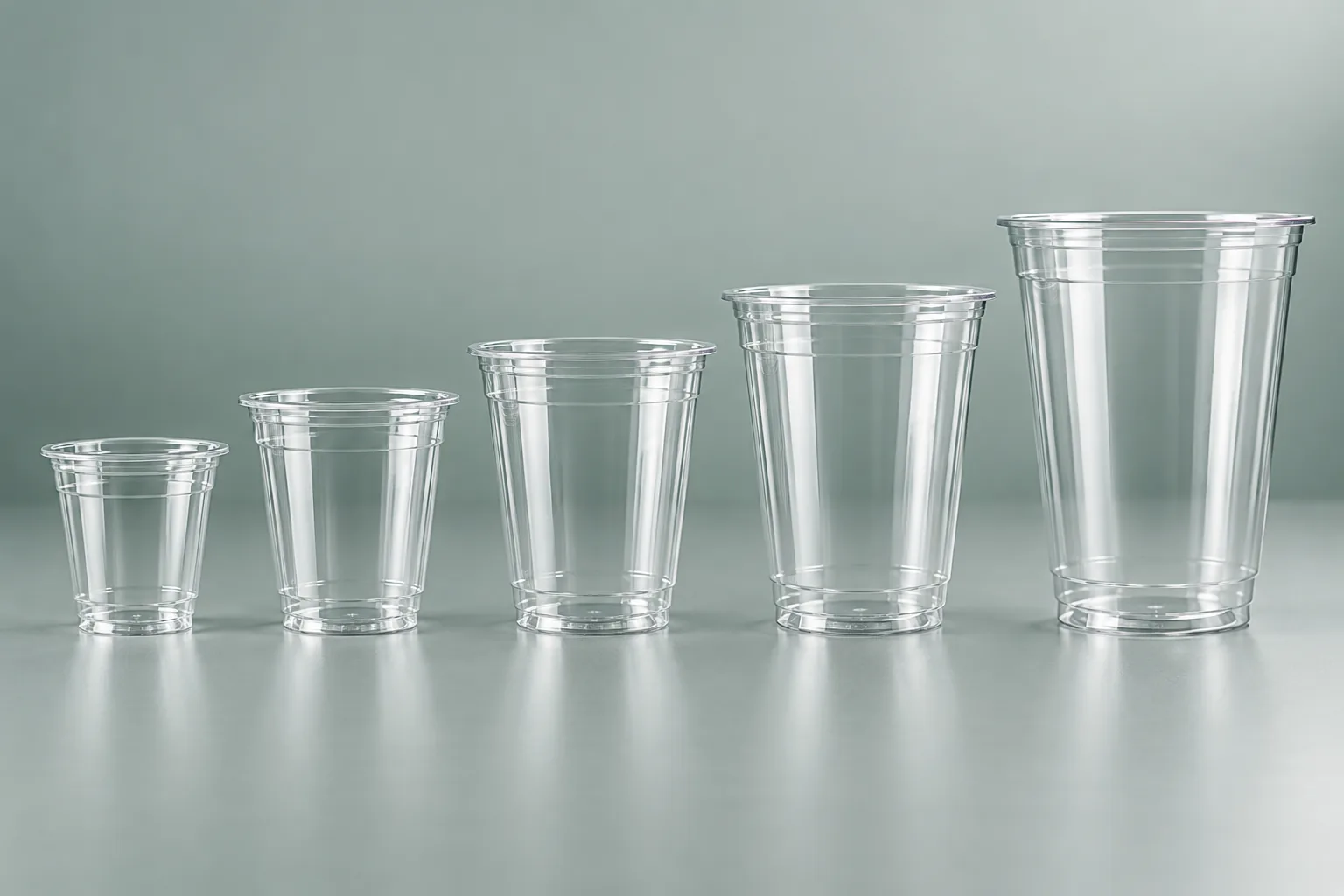
PET cups are commonly compared by capacity, rim diameter, height and overall cup profile. The nominal oz label is a useful starting point, but it is not a complete specification: two cups in the same size group can have different published ml capacities, rim diameters, bases and heights. That matters when a buyer is reviewing beverage presentation, a proposed closure or a packaging brief.
This guide summarises the currently published PET cup range from 12oz to 24oz. Use it to narrow a conversation, then review the specification table on the relevant size page before requesting a quote.
Quick PET Cup Size Overview
| Cup size | Published capacity range | Available rim / top diameter | Buyer consideration |
|---|---|---|---|
| 12oz | 360–440ml | 90 / 95 / 98 / 117mm | Compare compact profiles with the lower, wider 117mm format. |
| 14oz | 414–460ml | 90 / 93 / 98mm | Check the listed ml value and cup opening rather than relying on the nominal size alone. |
| 16oz | 500–600ml | 90 / 95 / 98 / 117mm | Review both the serving format and the rim family. |
| 20oz | 590–600ml | 90 / 95 / 98mm | Compare height, base and profile across the published options. |
| 24oz | 660–800ml | 95 / 98 / 117mm | Review the selected large-format cup with its intended fill and closure. |
The table is a guide to the published range, not a substitute for selecting an individual cup variant. The detailed pages list the dimensions associated with each currently published option.
What Does PET Cup Size Actually Mean?
Capacity is the published volume for a cup variant. It helps frame the serving format, but actual fill can also be affected by ice, toppings, headroom and the way a beverage is prepared.
Top or rim diameter describes the opening of the cup. Buyers commonly use it to begin a lid discussion and to organise cup families, but a matching diameter alone does not establish final lid compatibility.
Height affects the visual proportion of a drink and can matter when comparing how a cup fits into the intended service, storage or packaging routine.
Bottom diameter helps distinguish cup profiles that share a nominal size or a similar rim. It should be reviewed alongside height rather than in isolation.
Cup profile may be standard, U-shaped or wide / low within the published PET range. These profiles can change the presentation and dimensional relationship of a cup even where the nominal oz group is the same.
12oz PET Cups
The published 12oz PET Cups group covers 360ml to 440ml options with 90mm, 95mm, 98mm and 117mm rims. It includes standard and U-shaped options, together with a wide / low 117mm format.
For a 12oz buying brief, compare the listed cup opening and profile first. A 90–98mm option and a 117mm wide / low option may belong to the same nominal group while serving different presentation requirements. The individual page provides the published height and bottom diameter for each listed variant.
14oz PET Cups
The 14oz PET Cups page currently lists 414ml, 450ml and 460ml variants across 90mm, 93mm and 98mm rims. This is a clear example of why the oz term should not be treated as one fixed ml specification.
Buyers can compare the 90mm, 93mm and 98mm openings with the published height and base measurements before carrying a shortlisted option into a cup-and-lid review.
16oz PET Cups
The published 16oz PET Cups range runs from 500ml to 600ml and includes 90mm, 95mm, 98mm and 117mm rim options. Standard, U-shaped and wide / low profiles are all represented in the group.
For 16oz sourcing, the oz label is only the first filter. Compare the published ml capacity and rim diameter together, then review height and bottom diameter for the actual profile under consideration. This keeps a medium-size beverage brief tied to a real cup record rather than a generic serving label.
20oz PET Cups
The 20oz PET Cups group contains published 590ml and 600ml options with 90mm, 95mm and 98mm rims. The listed variants differ in height, bottom diameter and profile.
This group can be evaluated for larger cold beverage formats. Buyers should compare the actual dimensions with the intended beverage build, ice level and proposed closure instead of assuming that every 20oz cup has the same shape.
24oz PET Cups
The 24oz PET Cups page lists 660ml to 800ml options with 95mm, 98mm and 117mm rims. The group includes tall standard and U-shaped options as well as a wide / low profile.
For a large-format project, use the published height, base and rim data to compare the available cup profiles. The selected serving, ice volume and closure requirement should then be reviewed against the actual variant.
Why Rim Diameter Matters When Choosing PET Cups
Rim diameter is one of the practical fields that connects a cup to the rest of a packaging project. It provides a starting point for discussing a proposed lid, grouping cup families and planning inventory around the formats under review.
The published PET range includes 90mm, 93mm, 95mm, 98mm and 117mm rim families. A shared stated rim can help buyers narrow a conversation, but final compatibility still needs confirmation against the exact cup and lid specification. Cup profile, closure design and the intended beverage all remain relevant.
For that reason, a sourcing brief should record the selected cup variant and the proposed lid together. This is more useful than asking for a lid based on capacity alone.
How Buyers Should Compare PET Cup Specifications
Use a short, repeatable checklist when moving from a broad size group to a purchase discussion:
- Confirm the nominal capacity group.
- Check the published ml capacity for the shortlisted variant.
- Confirm its top or rim diameter.
- Review the listed height and bottom diameter.
- Discuss lid requirements separately with the actual cup record.
- Add any custom printing options or artwork requirements.
- Describe the intended beverage application and handling conditions.
- Request confirmation of the final product specification before ordering.
This approach keeps a quote request specific without filling gaps with assumptions.
PET Cup Size Selection by Beverage Project
Smaller cold beverage servings may be evaluated from the 12oz and 14oz groups, while medium takeaway drinks are often considered within the published 16oz options. Larger iced beverage projects can be assessed against the 20oz and 24oz groups.
Those are starting points, not fixed rules. A beverage with more ice or toppings may call for a different published cup profile than a drink with the same nominal serving label. Compare the capacity, rim and dimensions against the actual beverage build before selecting a variant.
PET Cups vs Other Cup Materials
Cup size is one part of the selection. If the material choice is still open, read the PET vs PLA Cups: A Practical Buying Guide for a separate discussion of material, lid fit, handling and sourcing questions. This guide remains focused on the currently published PET size range.
Explore Ruige PET Cup Sizes
Explore the PET cup range to compare the currently published 12oz, 14oz, 16oz, 20oz and 24oz groups. Each size page leads to the rim and profile information available for that group.
When you have a shortlisted cup, use the Request a Quote form to share the capacity, selected rim or profile, quantity, destination and any printing requirements already known.
Frequently Asked Questions
What are the common PET cup sizes?
The currently published PET range includes 12oz, 14oz, 16oz, 20oz and 24oz groups. Each group contains its own published capacity, rim and profile options.
Does the same oz size always have the same dimensions?
No. The published variants within one oz group can have different ml capacities, rim diameters, heights, bottom diameters and profiles. Review the individual specification table before selection.
Why does PET cup rim diameter matter?
It helps buyers compare cup openings and start a lid discussion. Final compatibility should still be confirmed against the specific cup and lid specification.
What is the difference between cup capacity and cup dimensions?
Capacity is the listed volume of a cup variant. Dimensions describe physical measurements such as rim diameter, height and bottom diameter. Both are needed for a useful comparison.
How should buyers choose between different PET cup diameters?
Start with the intended beverage and shortlisted capacity, then compare the published rim, height, base and profile. Confirm the proposed lid with the selected cup rather than choosing from diameter alone.
Can different PET cup sizes use the same lid?
Some cup families may share rim systems, but lid compatibility should be confirmed against the specific cup and lid specification before ordering.
Should buyers compare ml and oz together?
Yes. The nominal oz group is useful for navigation, while the listed ml capacity identifies the published variant being reviewed.