Test temperature
Internally tested at temperatures as low as -20°C. This states the test condition and is not a universal operating-range claim.
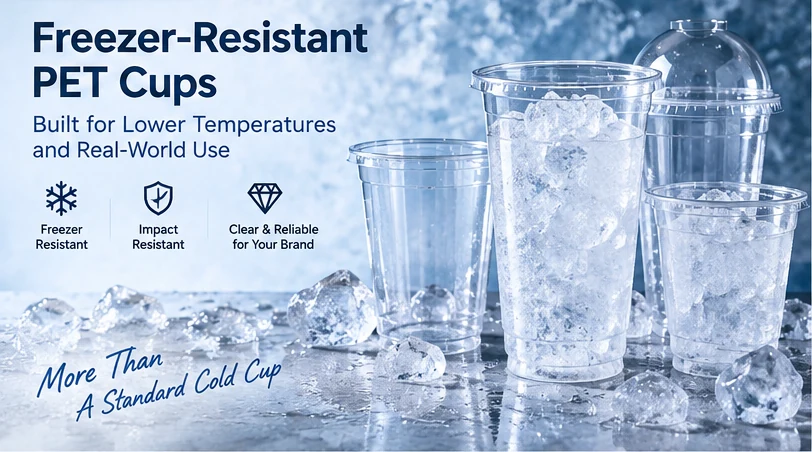
PET ICE CUP RANGE
Compare verified freezer-resistant PET cup capacities and rim sizes for freezing, cold-storage and frozen beverage projects with demanding low-temperature requirements.
Discuss Freezer Cup RequirementsSTART WITH CAPACITY
Compare capacity, rim size and cup profile before opening the full product specification.
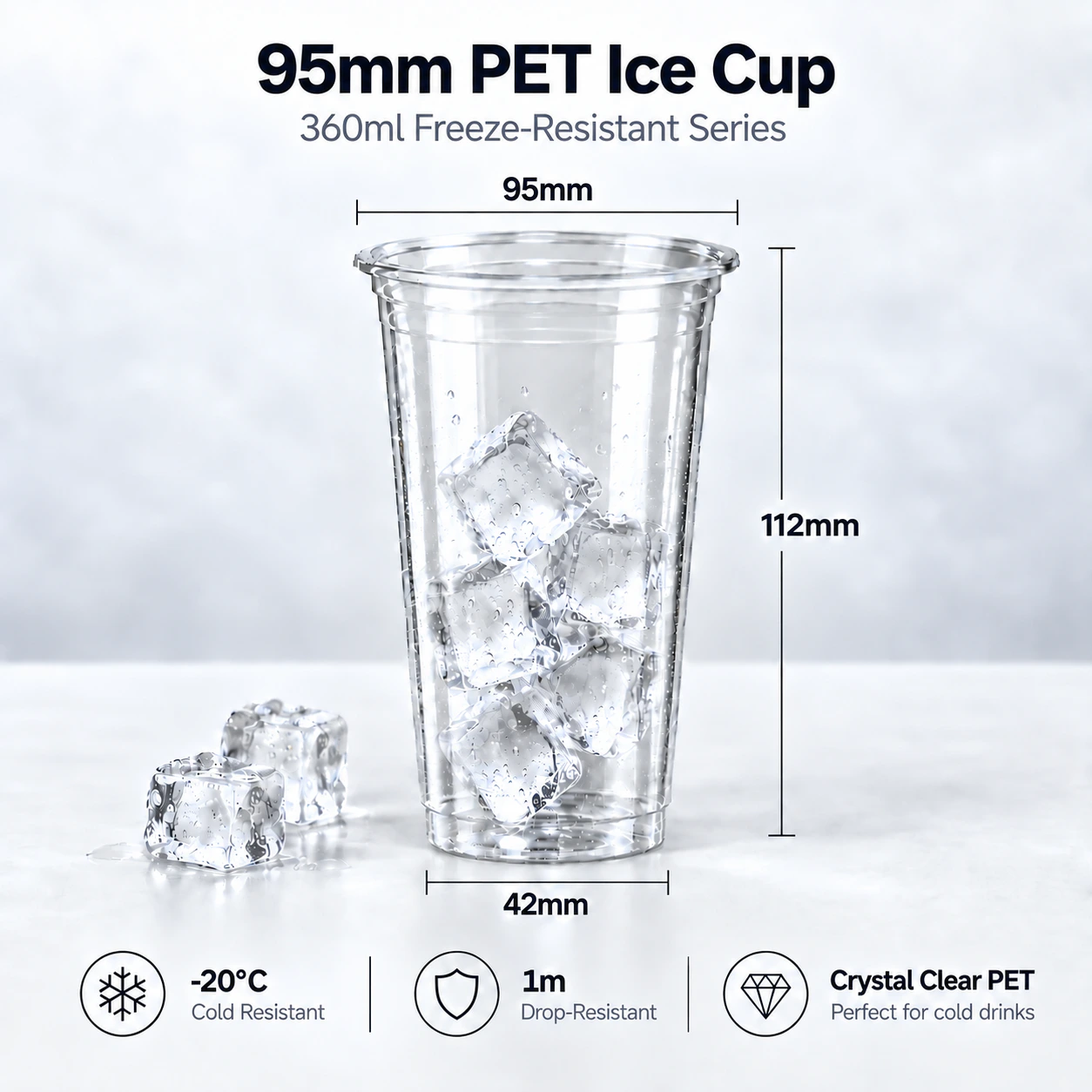
360ml capacity · 95mm rim
A compact 360ml format for buyers comparing a smaller-volume PET cup with a 95mm top diameter.
View Product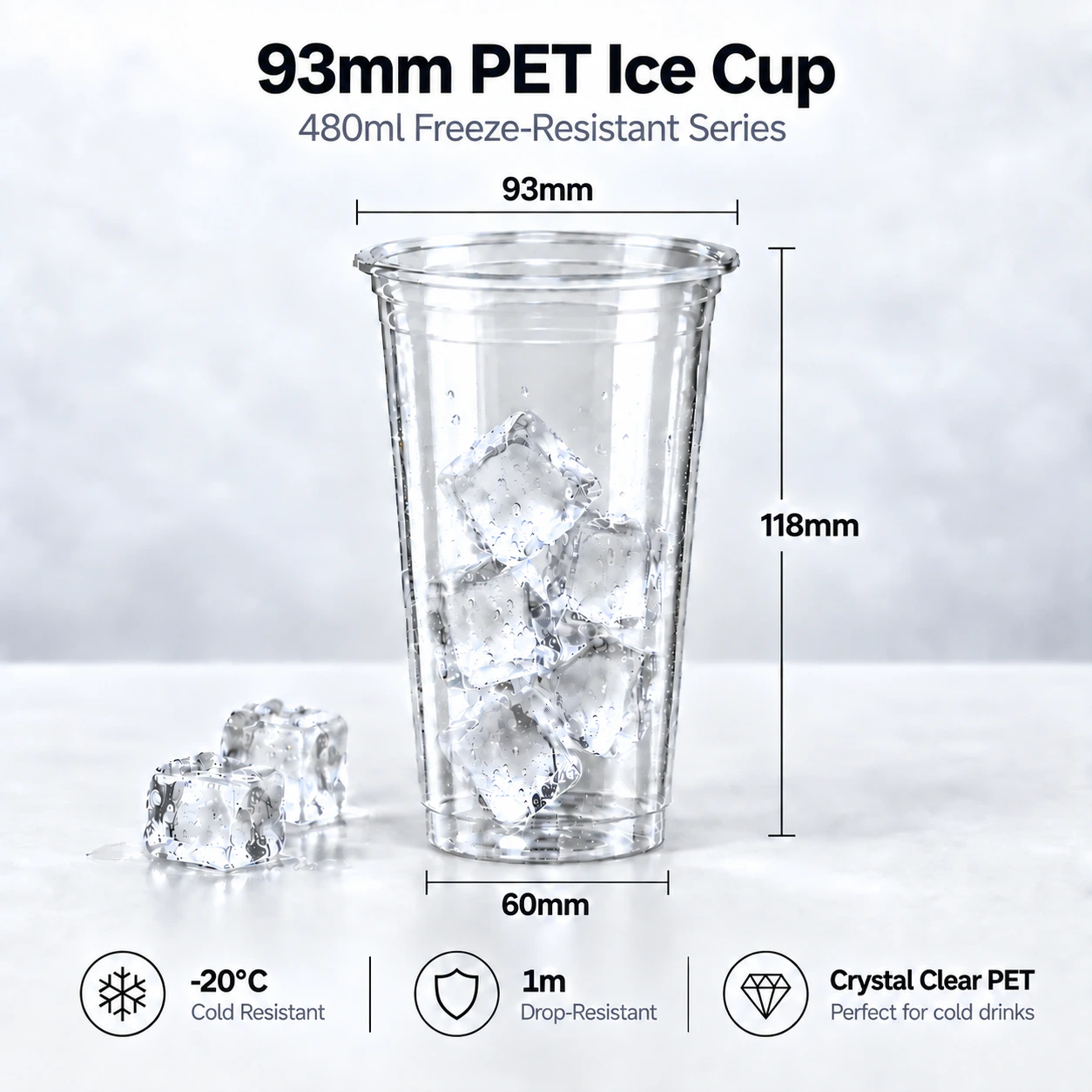
480ml capacity · 93mm rim
A mid-volume 480ml format for projects that need a 93mm top diameter and a balanced cup profile.
View Product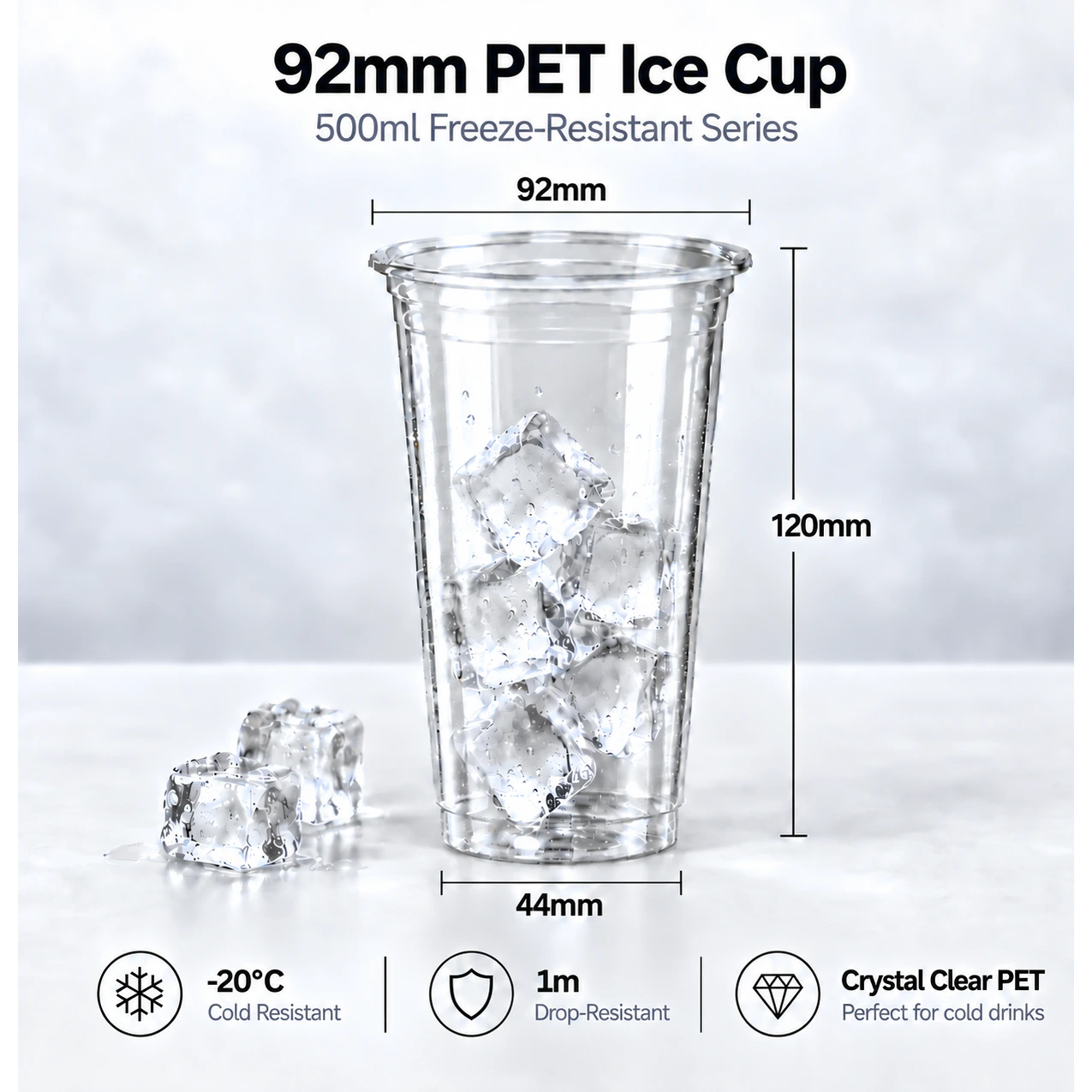
500ml capacity · 92mm rim
A mainstream 500ml format for freezer-resistant PET cup projects requiring a 92mm top diameter.
View Product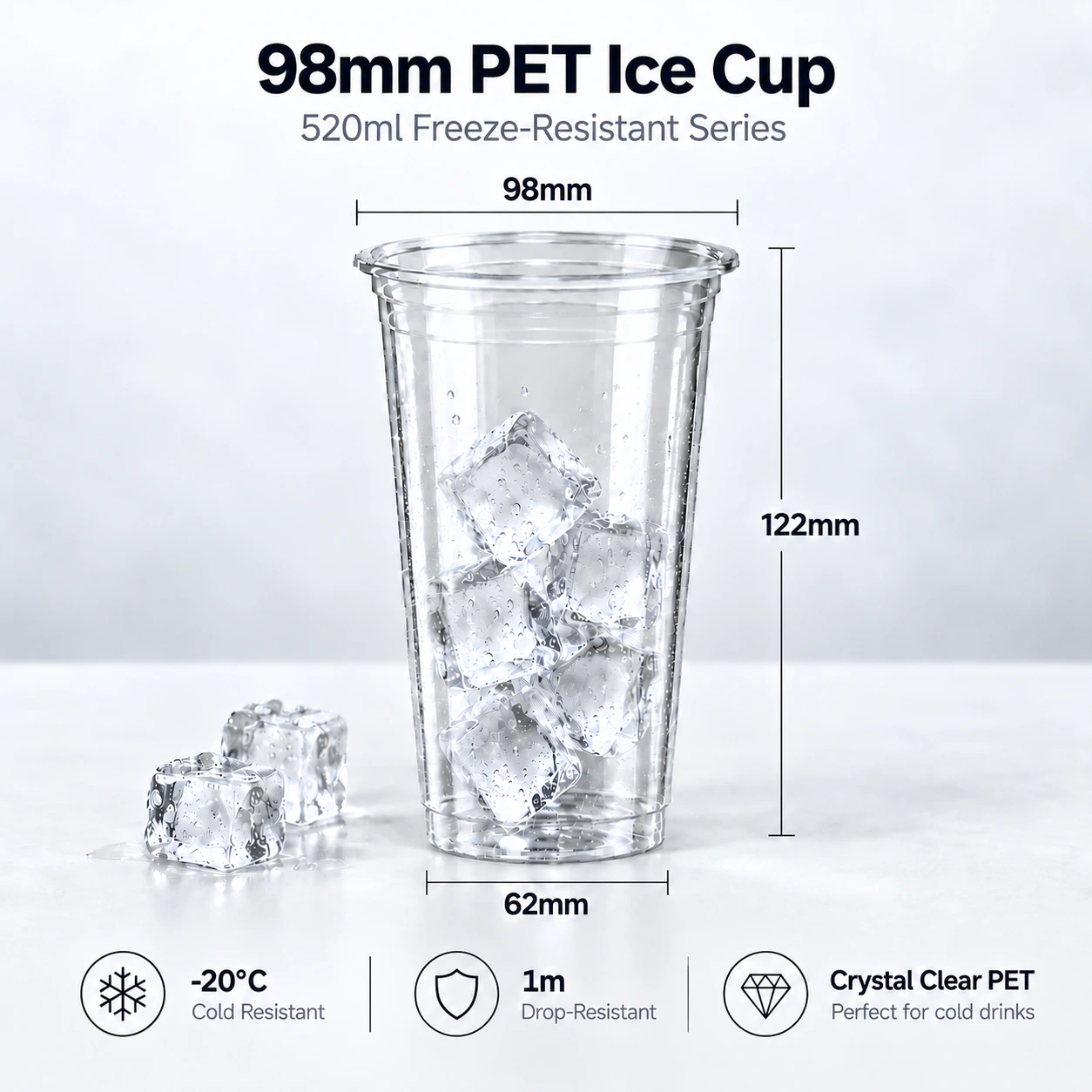
520ml capacity · 98mm rim
A slightly larger 520ml format for buyers comparing a 98mm top diameter within a low-temperature PET cup project.
View Product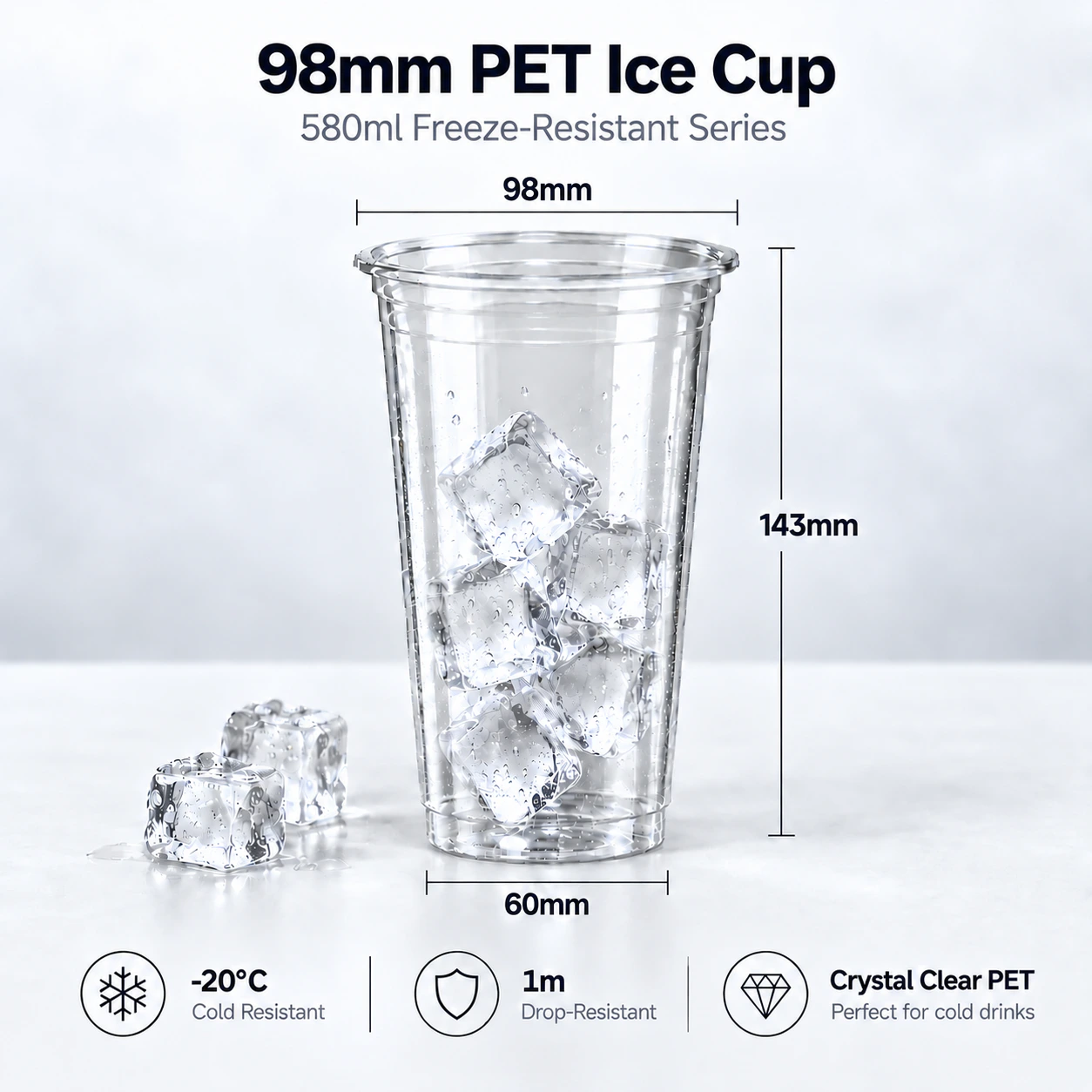
580ml capacity · 98mm rim
A larger 580ml option for ice-heavy or higher-volume cold beverage packaging projects.
View Product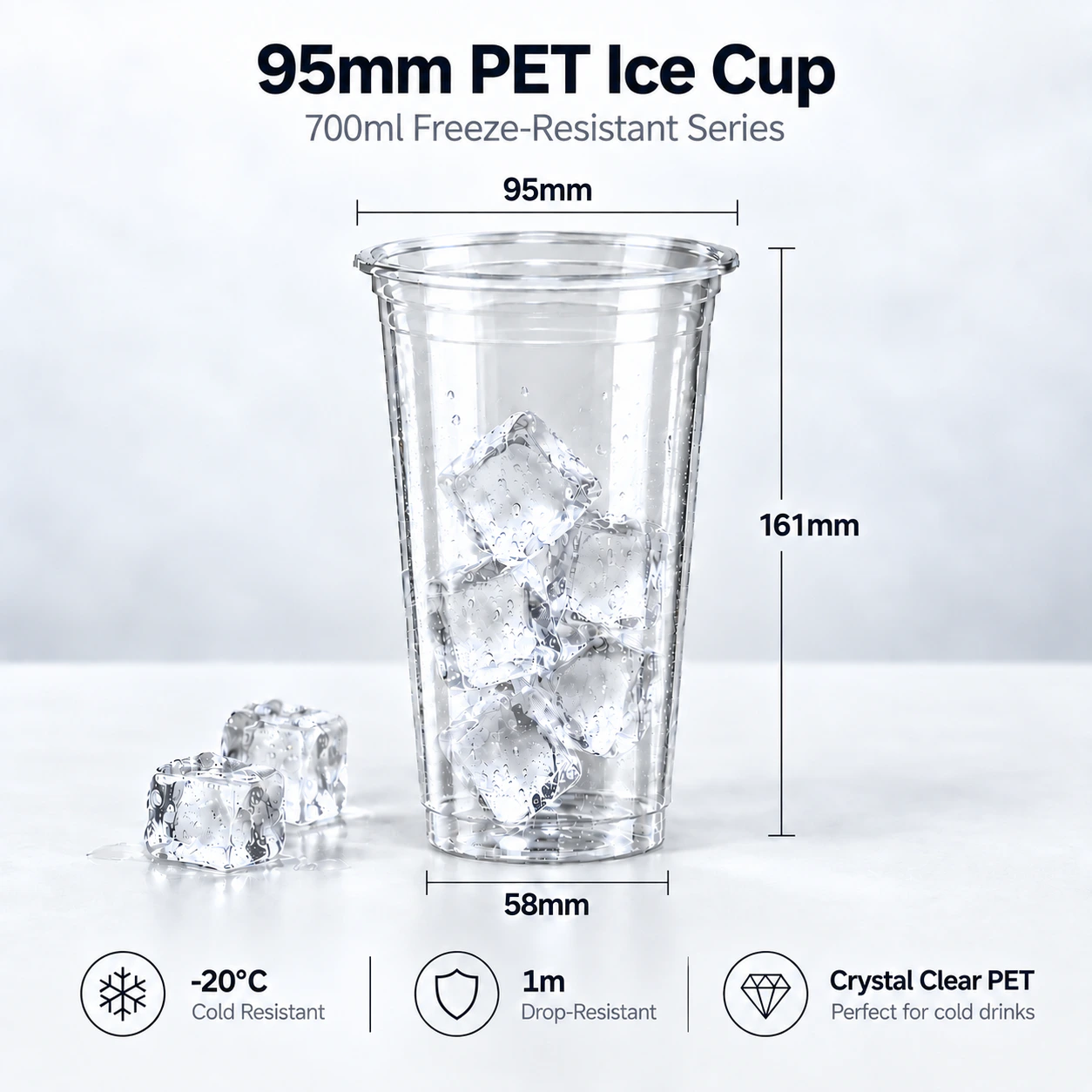
700ml capacity · 95mm rim
A high-capacity 700ml PET cup for larger cold beverage programs and freezer-resistant project briefs.
View Product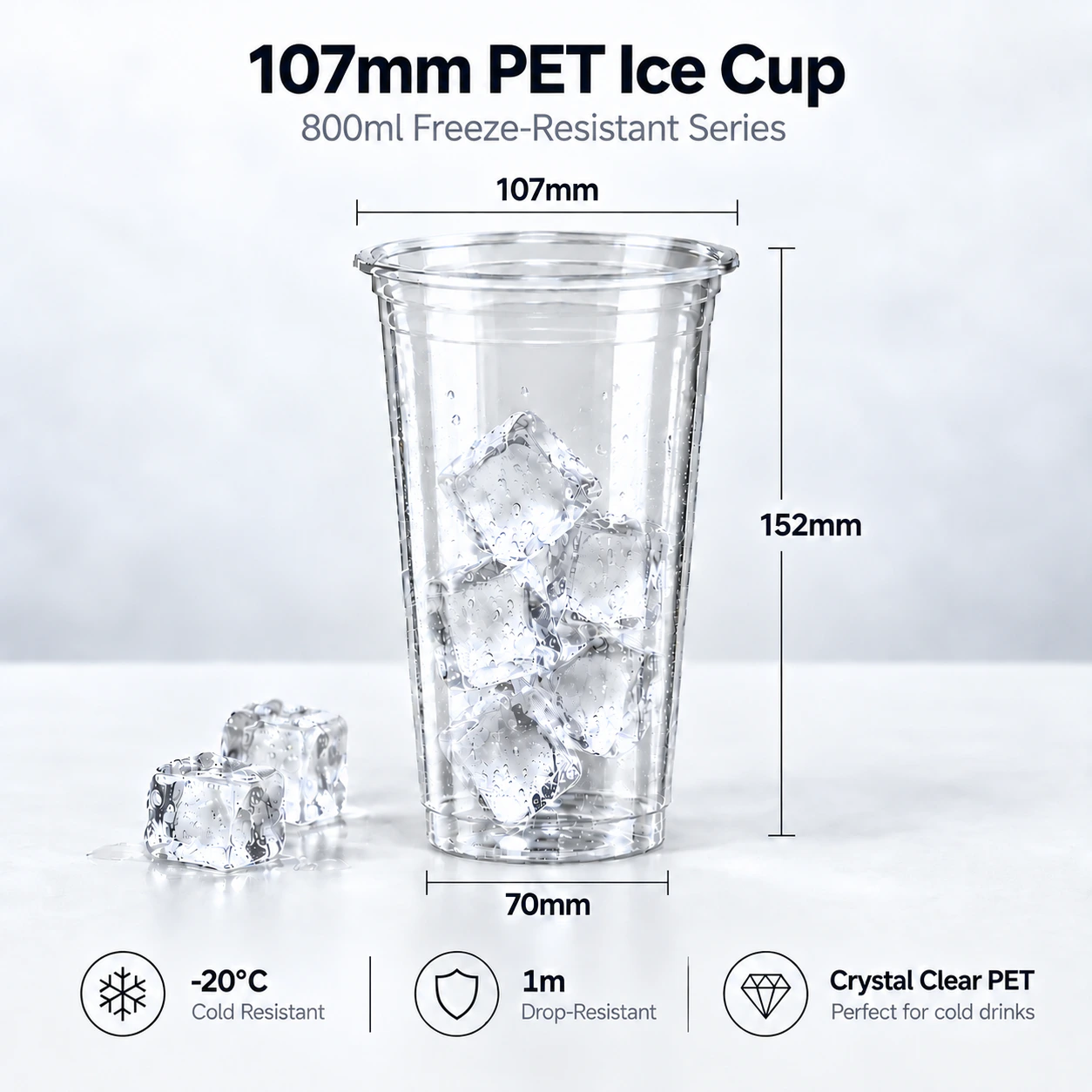
800ml capacity · 107mm rim
An extra-large 800ml format for high-volume freezer-resistant PET cup projects with a 107mm top diameter.
View ProductFREEZER PERFORMANCE
General cold-cup suitability does not establish how a cup behaves after prolonged freezer exposure. This range is positioned around internally tested low-temperature conditions.
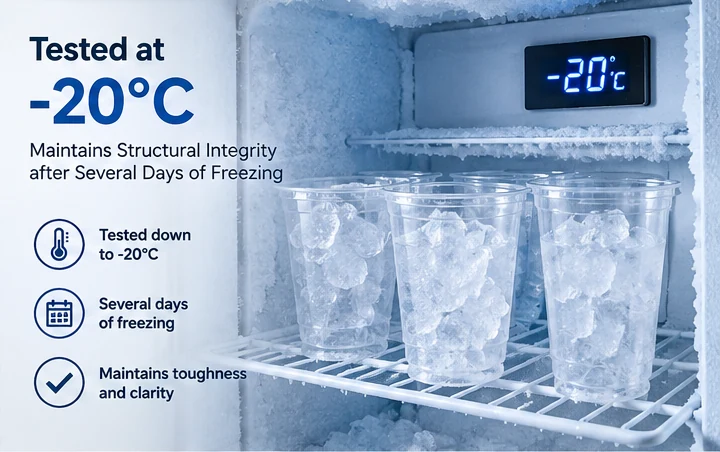
Internally tested at temperatures as low as -20°C. This states the test condition and is not a universal operating-range claim.
Under the tested conditions, filled cups remained frozen for several days before evaluation.
The cups retained their structural integrity after freezing under the tested conditions.
IMPACT / DROP TEST
After freezer exposure, a cup filled with ice was dropped from approximately 1 metre. No cracking or shattering was observed under the tested conditions.
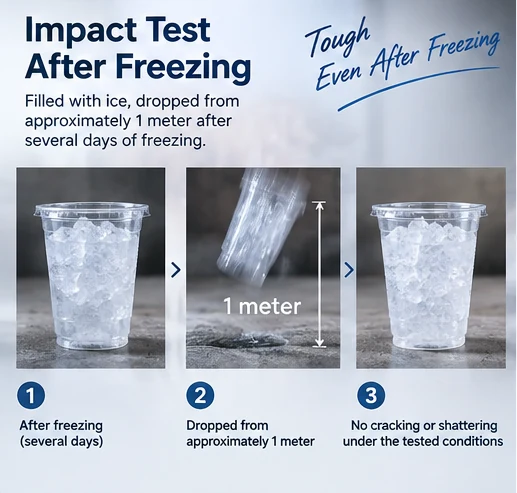
The cup was evaluated after freezing and while filled with ice.
The internal test used a drop height of approximately 1 metre.
No cracking or shattering was observed in the test. These results reflect our internal test conditions and should not be interpreted as a guarantee of performance under every use condition.
APPLICATIONS
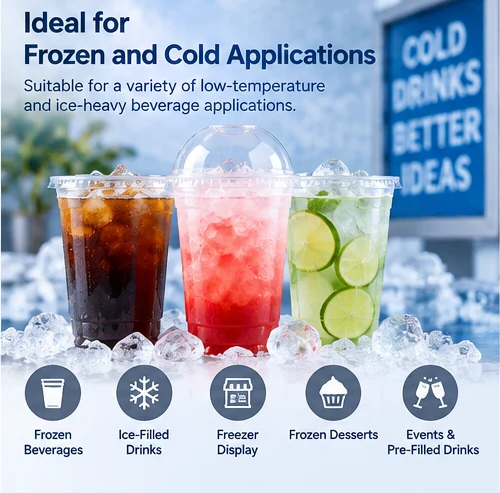
Use the intended contents, freezing method, storage duration and handling route to decide whether the tested conditions are relevant to your project.
LID COMPATIBILITY
Freezer exposure and post-freezing handling can affect the complete cup-and-lid system. Review the proposed lid style and physical fit with the actual selected cup rather than relying on a general diameter description.
Provide the intended contents, freezing process, handling scenario and preferred lid style. Final compatibility should be confirmed for the actual cup and lid combination.
CUSTOM PRINTING
Share the artwork, intended placement and presentation requirements after identifying the cup and use conditions. Printing details are confirmed against the selected product and project brief.
Explore Custom PrintingMANUFACTURING & QUALITY
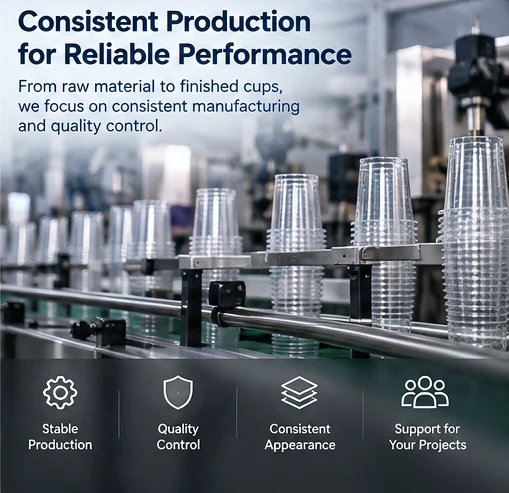
Record the contents, freezing process and expected storage duration.
Confirm the selected cup and its verified specification.
Evaluate the proposed closure with the actual cup.
Agree on the checks required for the buyer's intended conditions before approval.
FAQ
The PET cups were internally tested at temperatures as low as -20°C. This is a report of internal test conditions, not a general temperature-range claim for every application. Buyers should share their storage and use conditions for project review.
Under the tested conditions, filled cups remained frozen for several days and retained their structural integrity. The exact requirements of each project should be reviewed against the intended contents, freezing process and handling conditions.
After freezing, a cup filled with ice was dropped from approximately 1 metre. No cracking or shattering was observed under the tested conditions. These results reflect our internal test conditions and should not be interpreted as a guarantee of performance under every use condition.
The distinction is the focus on defined freezer exposure and post-freezing impact behaviour. A general PET cold-cup description does not by itself confirm performance after several days of freezing, so buyers should compare products using the actual test conditions and their intended use.
Share the intended contents, target serving format, freezing temperature and duration, handling or transport scenario, quantity, destination, lid preference and printing requirements. If a detail is not yet confirmed, identify it as open for discussion.
RFQ
Include the intended contents, target freezing temperature and duration, handling scenario, quantity, destination, lid preference and printing requirements. Ruige can then review the project against confirmed product information and the relevant test conditions.
Request a Project Review